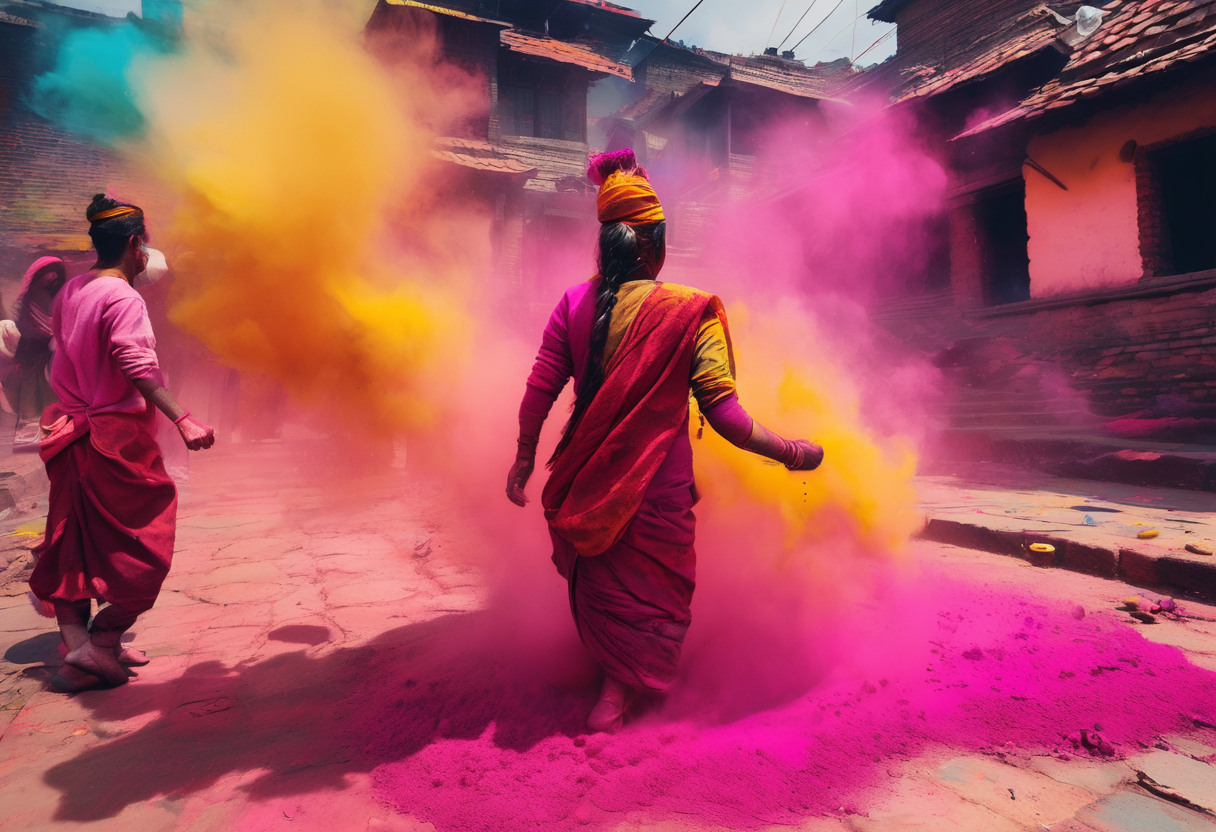
Holi, also known as the festival of colors, is a widely celebrated tradition in Nepal. This vibrant festival is characterized by colorful powders, water balloons, and water guns, accompanied by music, dancing, and feasting. But beyond the festivities, Holi holds a deep meaning rooted in the history and mythology of Nepal.
According to Hindu mythology, Holi commemorates the triumph of good over evil through the story of Prahlada and Holika. Prahlada, a devotee of Lord Vishnu, was protected by him from his father’s wicked intentions. The burning of Holika, an evil demoness, symbolizes the destruction of all negative forces. This mythological significance of Holi is further reinforced by the legend of Lord Krishna and Radha, where the playful colors represent the love and affection between them.
But Holi in Nepal is not just limited to religious significance. It is also a time to strengthen social bonds, as people come together to play, laugh, and forgive each other. The festival is celebrated with great enthusiasm across the country, with the major highlight being the throwing of colors and water. Festivals, music, and traditional delicacies add to the joy and festivities of Holi in Nepal.
The celebration of Holi in Nepal is not just a tradition, but a representation of unity and harmony. As we delve deeper into the history and mythology of this festival, we discover its true essence of spreading love, joy, and positivity. So, let us join in the revelry and embrace the spirit of Holi, not just in Nepal, but in our hearts as well.
Comments are closed, but trackbacks and pingbacks are open.